
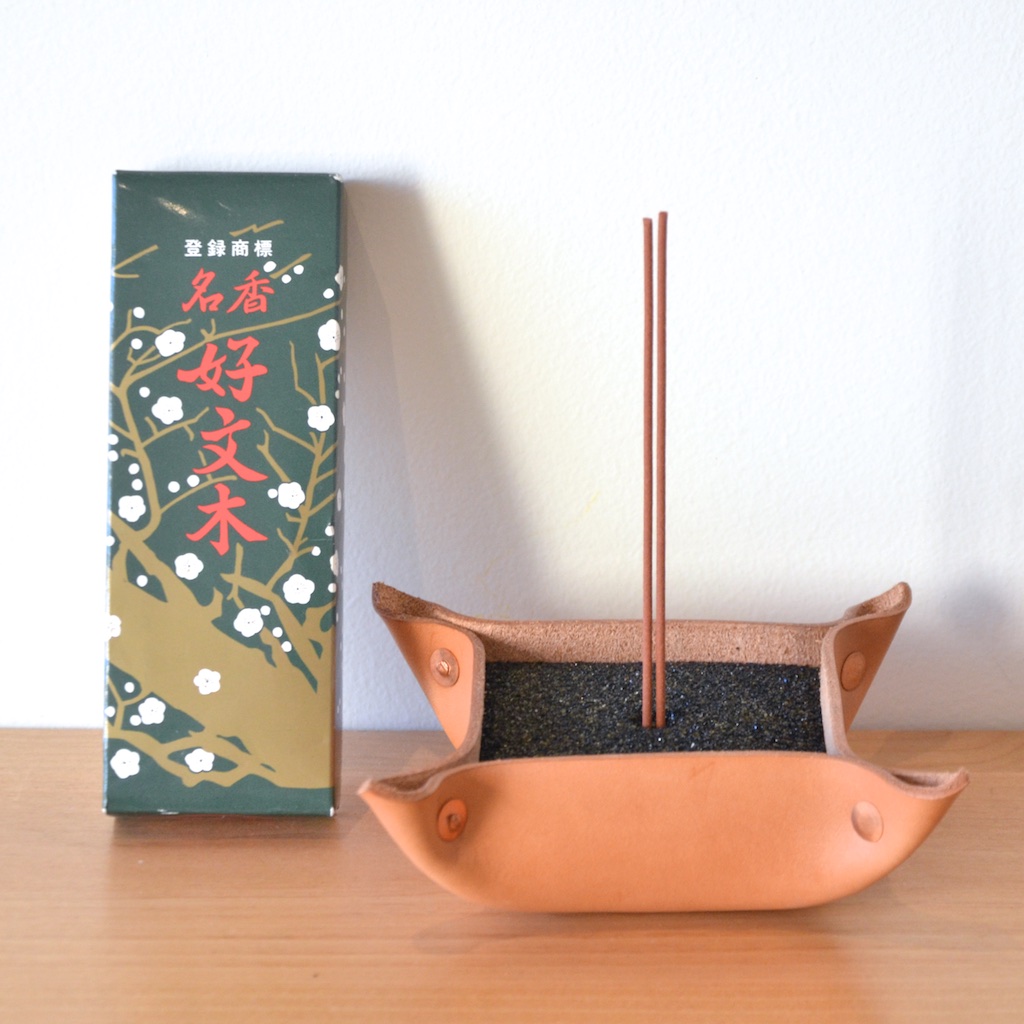
Any visit to Japan would be incomplete without a visit to a Shinto Shrine. At any shrine you'll find boxes of sand with hundreds, or thousands of incense sticks burning. You'll find small versions of this in homes and businesses throughout the country. Each burning stick carries offering and prayer to the heavens.
This is that incense, and it has been burned in this way since 1657.
In many ways, Japan smells like Baieido.
We carry their two classic scents Kobunboku and Kaiun koh.
Kobunboku (in the green box) is an expression of the plum tree with a mix of sandalwood, borneol, cinnamon, clove and medicinal herbs. It is light and slightly sweet. Sticks are thin and round.
Kaiun koh is an intense mix of wood and spice. The scent is rich, deeper as compared to Kobunboku. Many consider its aloeswood, borneol, camphor, cassia and sandalwood a traditional "old Japan" scent.
It's sticks are thick and square.
Baieido Incense is made with no sticks and is burner best when placed upright in sand. It pairs perfectly with our Sand Incense Burner, available here.
In Japan, prayers at Shinto shrines are often made while placing incense vertically in sand.
We’ve filled our 6" copper rivet box with sand to bring this traditional style home.
Each comes with a glass jar of sand.
Traditional Japanese Baieido incense recommended but not required - any stick will work. Cone incense can sit on the sand as well.