
We work directly with longtime friends from the Los Angeles West African Community to offer exceptional examples of
traditional works from many African cultures. You will find Senufo, Lobi, Ashanti, Nupe, Kongo, Hehe and others here.
Our friends’ collections are brought directly from original communities, family to family - not through middleman dealers.
We often help sort and clean pieces with them as they arrive and are able to offer many of the rarest styles as a result.
Your support in purchasing these fine works helps us give back to communities both in Los Angeles and in West Africa.
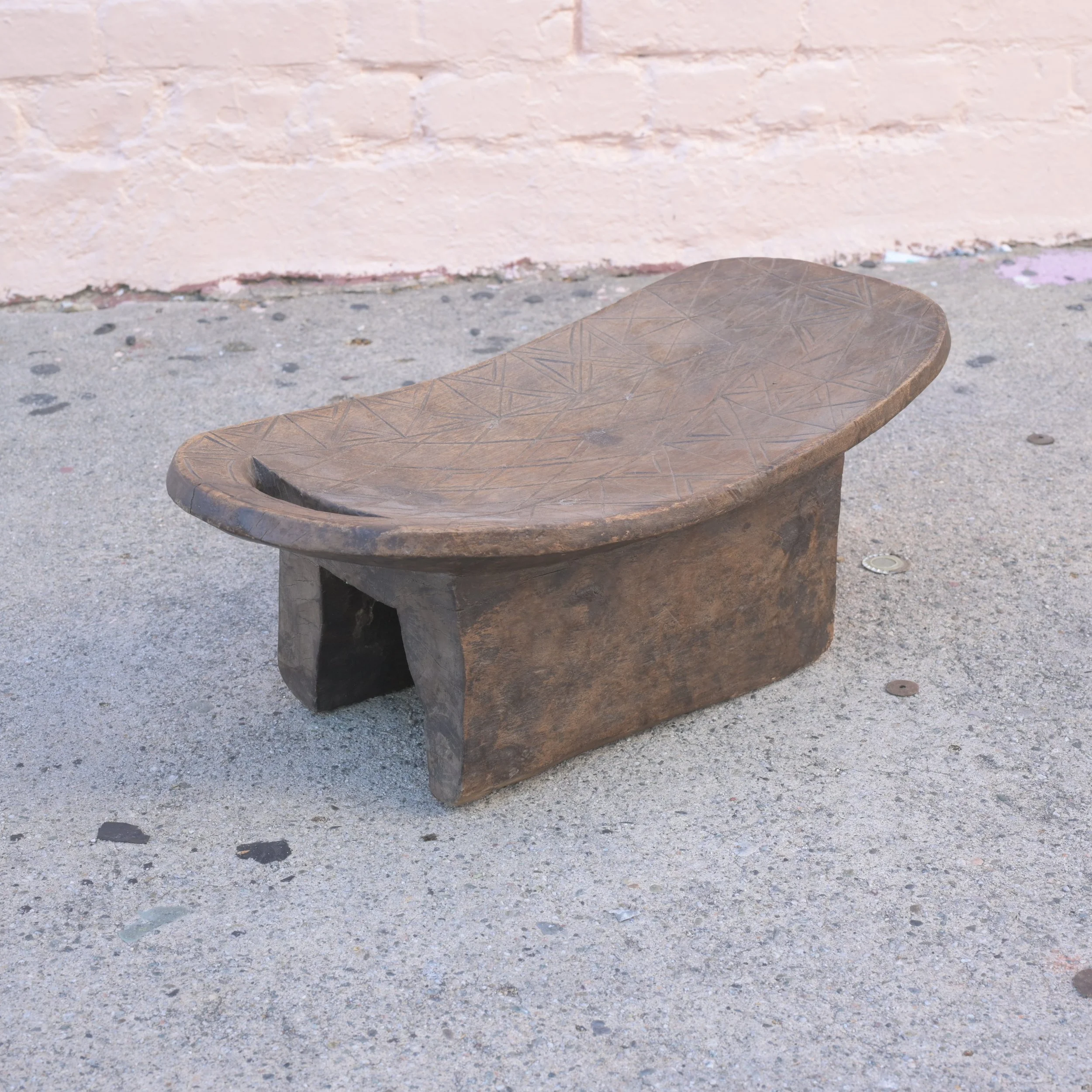
Beautiful Lobi stool from Burkina Faso
Carved from a single block of Iroko wood
Mid-20th Century Origin
Amazing adornment on the curved to and rare carved handle!
Condition consistent with age and use.
21” Long
9.5” Deep
7” Tall at center / 8” at handle / 8.5” at opposite end

Stunning Example of a Decorated Hehe Stool
Tanzania
Mid-Century Origin
Carved from a single block of wood
Beautiful Dark Patina with Metal Repairs and Decoration
Condition consistent with age and use
Diameter - 10.75”
Height - 10.5”
Hehe stools have become quite rare and highly collectable in recent years.

Rare Early 20th Century Ashanti Studded Stool Style
Classic hand carved style with incredible patina.
Visible deterioration on bottom (see images).
Despite condition issue on the underside, this is a very solid stool that sits flat.
Very little functional impact results from it’s age.
The extensive decorative stud pattern is a rare find. Most Ashanti stools have no studs, but when present there are only a few added.
Size:
15” Wide
10” Tall
8” Deep
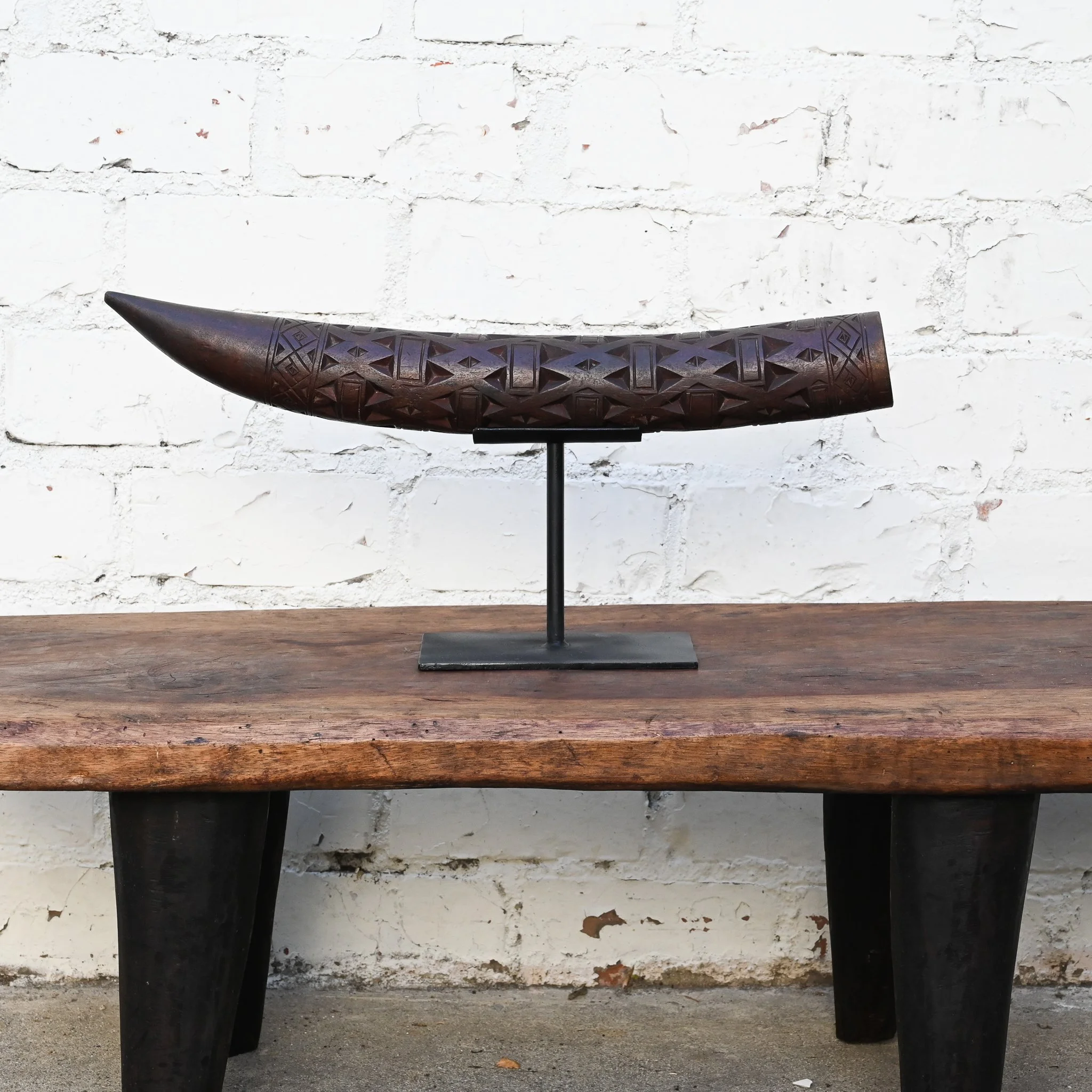
Carved Wooden Elephant Tusk
Traditional Kongo People Style
DR Congo
Mid-20th Century Origin
Includes Iron Stand
Condition consistent with age.
Note the slight cracking of wood at the thickest end - does not affect overall structure of piece.
Size:
22.5” Long
3” Thick at Widest End
10” High on Stand
Stand Base: 5 x 8”
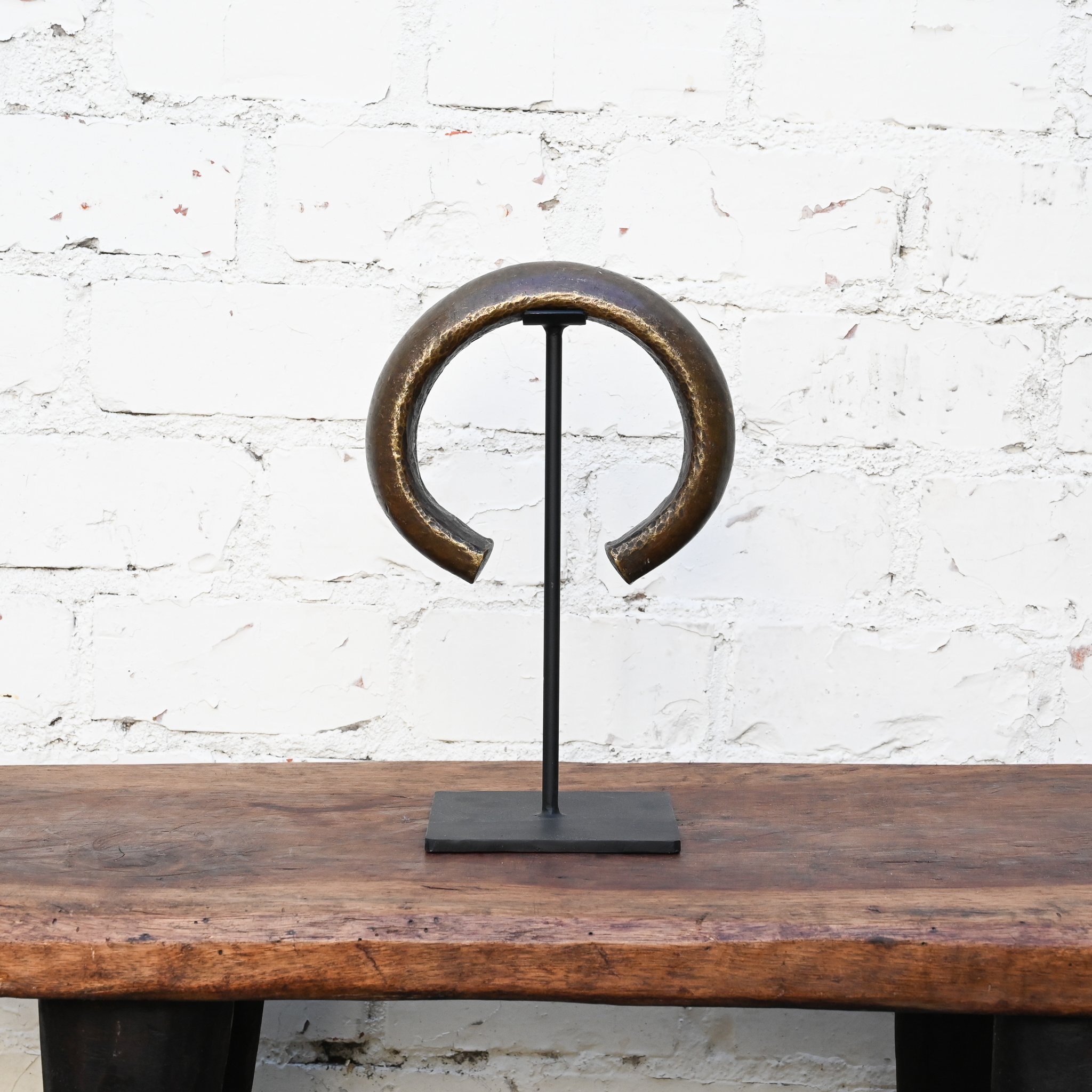
Bronze Manilla Collar
West African Origin
Early 19th Century
Condition consistent with age.
Size:
8.75” diameter
2” thick
3” opening
Height on stand: 13.75”
Stand base: 6 x 6”
17lbs
__________________________
This piece would have been worn around the neck by a young woman of status - perhaps a young bride - as a sign of wealth.
Also known as Òkpòhò, Manillas were used in West Africa as currency and signs of wealth, beginning in the 1500s. Most are known to be smaller pieces, used as anklets and bracelets. This primitive collar style is quite rare.
Manillas are often associated with the West African slave trade. European traders would recreate traditional designs and introduce them to local traders as payment for captives. However, by the early 20th century, West African governments and colonial powers began to “phase-out” manillas as currency. By 1948 the British had collected over 32 million manillas associated with the slave trade to be sold as scrap. Families were allowed to keep up to 200 pieces for traditional use. Given that a limited number were kept, most remaining pieces were generations old, coveted representations family wealth.
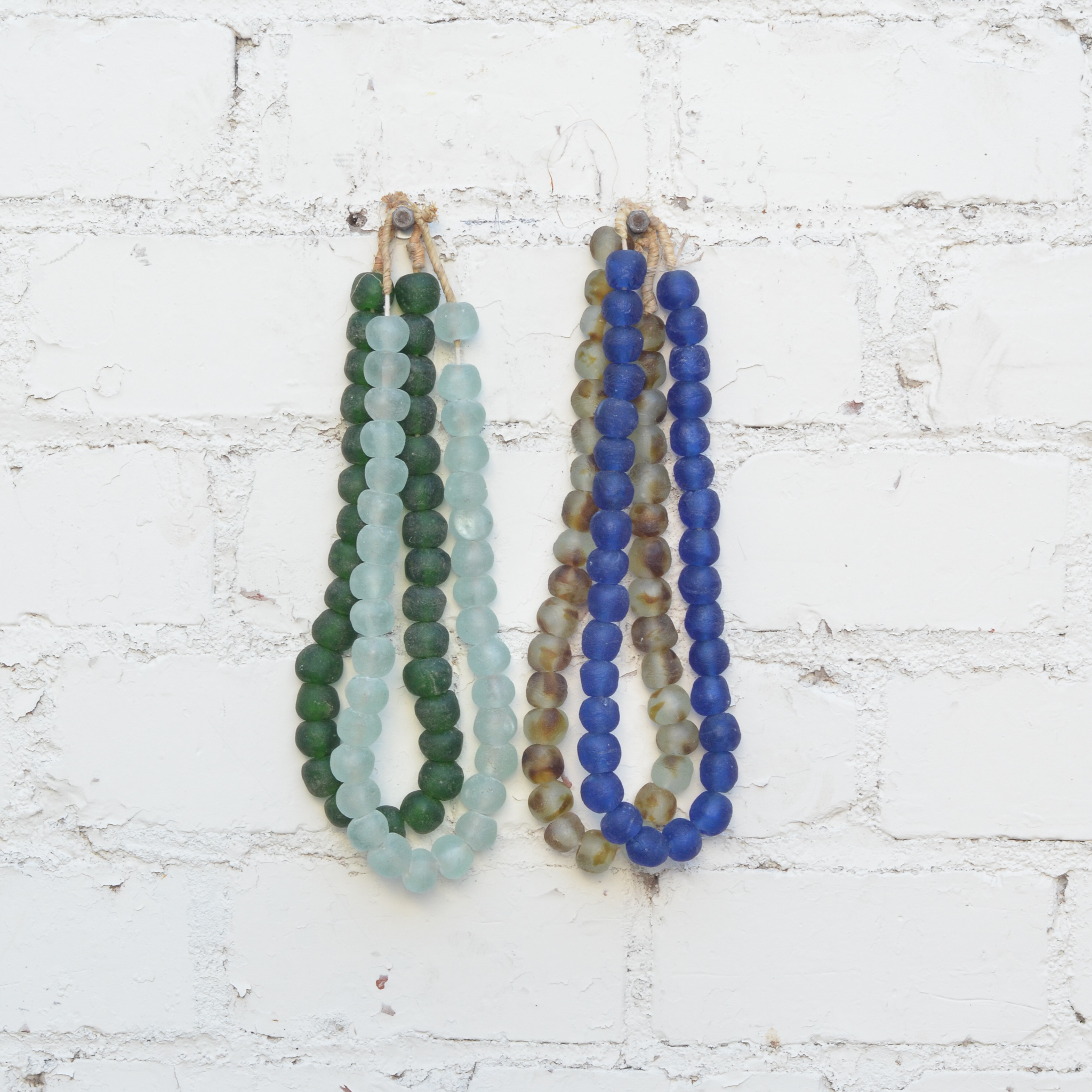
Fat glass beads made from reclaimed/recycled glass by the Krobo tribe of Ghana.
Beautiful in full stands as decoration or individually as an accent.
Approx 25” strands.
Approx 30-35 beads per strand.
Approx .75” diameter per bead.
Mid-Century Iroko Wood Milk Bowl
Hand Carved and Used by the Fulani People of North/West Africa
Wood grain and chisel marks along with carved traditionally carved adornments are visible.
This bowl is appropriately worn from use - including stacking and storage during travel by the semi-nomadic Fulani. A collectible piece of Fulani culture, a beautiful object and functional bowl - brought to us by great West African friends.
Diameter: 12.75”
Height: 7”